

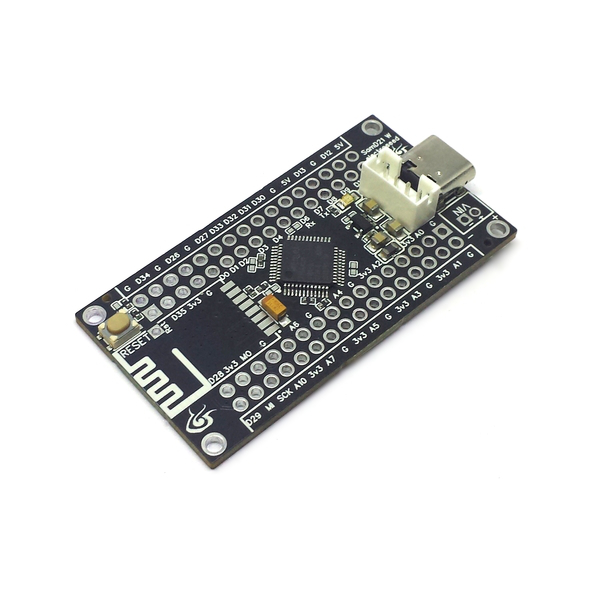
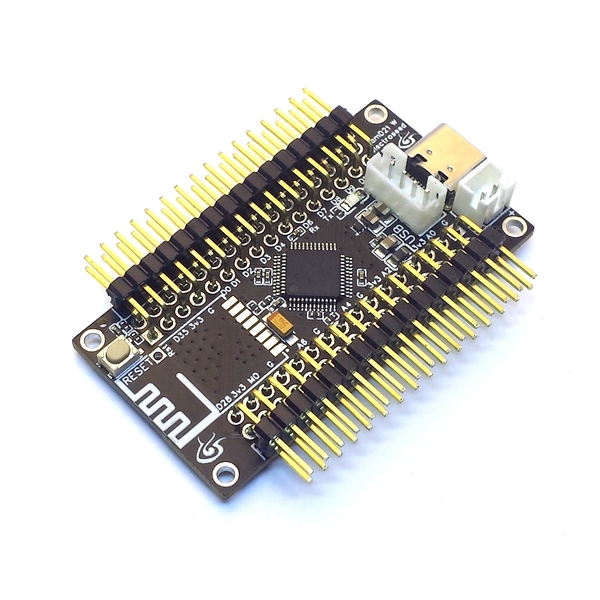
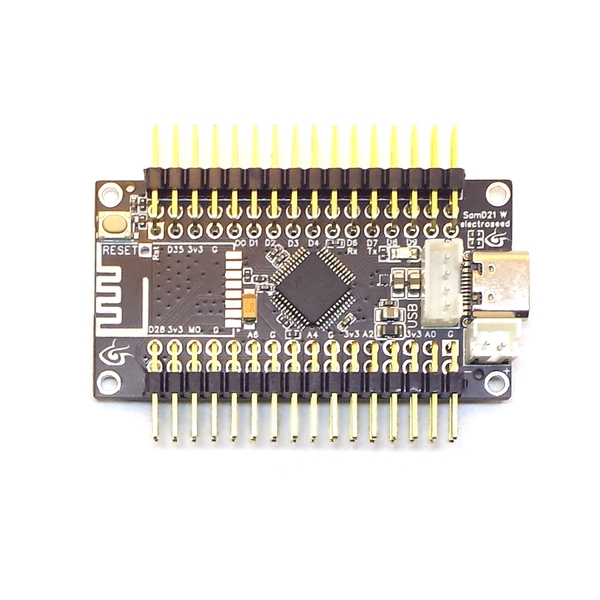
ElectroSeed SamD21 WB USB
34 in stock
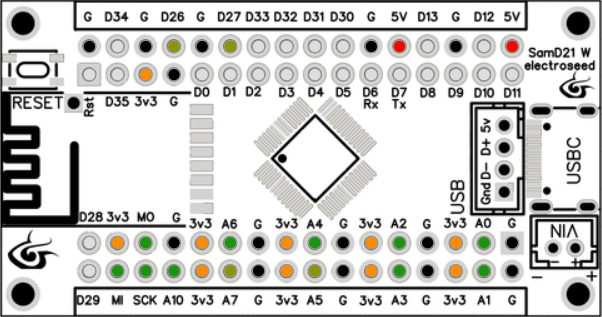
The ElectroSeed SamD21 WB USB board offers 36 USB inputs/outputs, including 14 analog inputs. 4 analog inputs have pull-up resistors, which allows direct connection of bodacs, thus adding the possibility of connecting 20 additional buttons.
15,96 € incl. VAT (13,30 € excl. VAT)
Le Bodac est un montage qui permet de mettre en oeuvre plusieurs boutons sur une seule entrée analogique, tout en ayant la possibilité de les avoir appuyés en même temps. Le montage est simple : une résistance entre chaque borne des boutons, et un seul fil entre chaque bouton.
Ce pack de résistances de précision 1%, permet de réaliser un Bodac pour 5 boutons ou moins.
Les supports IO permettent d'éviter de souder directement sur la carte, évitant ainsi les courts-circuits. Vous pourrez connecter vos boutons/encodeurs/etc avec des câbles dupont. La carte sera fournie avec les supports déjà soudés.
En choisissant un package NodeBlue, vous bénéficiez de la configuration de votre choix. Un formulaire de configuration vous sera envoyé après votre commande afin de préciser la programmation souhaitée. Ce formulaire est similaire à cette page, qui permet de tester si la configuration est possible. La carte sera programmée et testée en conséquence, et les schémas de câblage vous seront fournis. Si vous ne prenez pas de package, vous devrez programmer la carte vous même avec l'IDE Arduino. Plus d'information sur les différences entre le package standard et le package pro sont disponibles sur cette page.
34 in stock
The ElectroSeed SamD21 WB USB board offers 36 USB inputs/outputs, including 14 analog inputs. 4 analog inputs have pull-up resistors, which allows direct connection of bodacs, thus adding the possibility of connecting 20 additional buttons.
The 5v is available around the serial port to connect a Nextion screen or a 7-segment display. The 5v is also exposed to connect RGB leds. Screen and leds are managed with SimHub software.
The following connectors are also proposed :
- A 4-pin JST 2.0 connector to easily connect an aviation connector.
- A USB-C connector to program the board or connect a USB extension.
- A 2-pin JST 2.0 connector with 5v to power permanently button leds for example.
If you choose a customized firmware option, NodeBlue package is included with the board, so you can have any configuration you need. A configuration form will be sent after your order, so you can specify the desired programming. The board will be programmed accordingly and the wiring schematics will be provided. You can check here if your configuration is possible.
| Dimensions | 1 × 1 × 1 cm |
|---|
Schematics
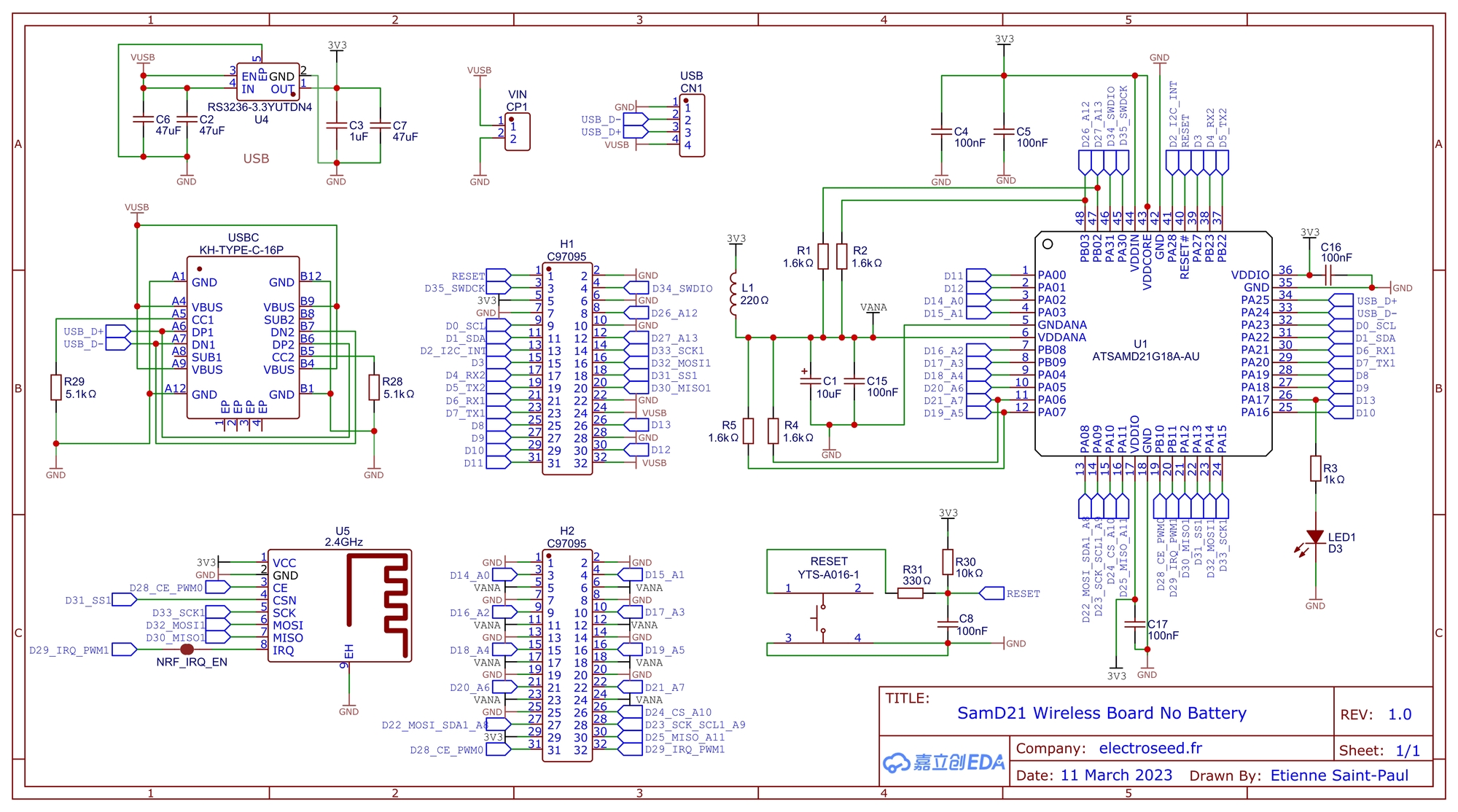
Pinout
Downloads
3D Models (.obj format) :
– Version with vertical headers
– Version with horizontal headers
3D Model (.step format) : Version avec headers horizontaux
– Support for printing (format .stl)
Tutorials
- Calibration with the serial monitor
- Click on the “Cal” input of the analog input module, the sensor module (eg AS5600) or the “Range” module. The module name can be “Accel”, “X”, “Y” or “Z”, or something else depending on the application. Once cal is pressed, a message appears in the serial monitor window. Follow the instructions.
- Once the calibration is complete, double click on the module to change the low and high deadband parameters. Check in the controller tab that when the axis is completely released the value is 0 and when it is fully released the value is 65535. Adjust the dead zones if necessary. Click on “Invert” if you need the axis to work in an inverted way.
- Manual Calibration (if the USB Virtual serial port is not present or used by another non compatible module)
- Double-click on the analog input module “X”, “Y” or “Z” (or any other name depending on the project) concerned by the axis.
- Position the axis to the minimum, copy the value displayed in the controller tab (adding a small margin), in the “In Min” parameter of the module.
- Position the axis to the maximum, copy the value displayed in the controller tab (by removing a small margin), in the “In Max” parameter of the module.
- change the low and high deadband parameters. Check in the controller tab that when the axis is completely released the value is 0 and when it is fully released the value is 65535. Adjust the dead zones if necessary.
Once each axis has been done :
- Save the project so that the settings are saved, either by using the “Save project” menu or with the CTRL-S key combination. If the project is read-only, use the “Save As” menu and choose another name.
- Select the com port among those detected (disconnect any other detected boards to be sure to program the board you want).
- Upload the project to the board (“Upload” button).
The settings are saved in the flash memory of the board and are restored at each restart.
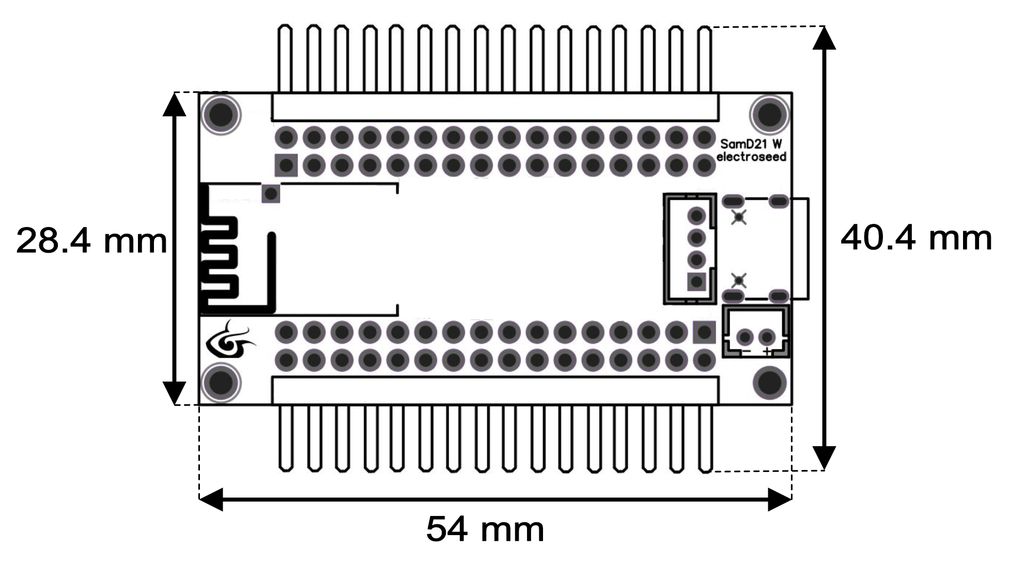
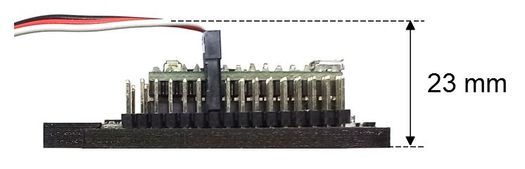
Dimensions
 |
 |
 |
Related products
-
- Out of stock -USB
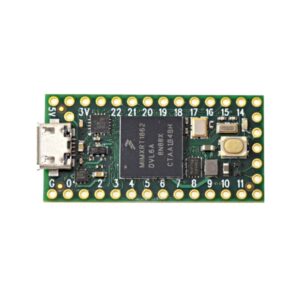
Teensy 4.0
Teensy 4.0 is simply the most powerful platform of the Arduino environment :
- ARM Cortex-M7 at 600 MHz with a 32 and 64 bits FPU
- 2MBytes Flash, 1 MBytes RAM, 4K EEPROM (emulated)
- 2 USB ports, both 480 MBit/sec
- 7 Serial ports, 3 SPI, 3 I2C
- 3 CAN Bus (1 with CAN FD)
- 2 I2S Digital Audio, 1 S/PDIF Digital Audio
- 1 SDIO (4 bit) native SD
- 32 general purpose DMA channels
- 31 PWM pins
- 40 digital I/Os, all interrrupt capable, with 24 accessible on pins
- 14 analog inputs / 2 ADCs
- Cryptographic Acceleration, Random Number Generator
- RTC for date/time
- Pixel Processing Pipeline
- Power On/Off management
Teensy 4.0 maintains the same form-factor as Teensy 3.2, with most pins offering similar peripheral features.
Drivers Download : Teensy Drivers
SKU: 269 -
USB
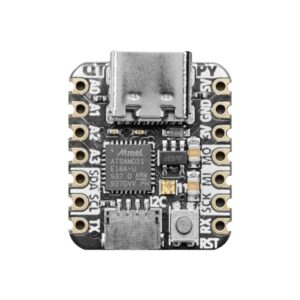
Adafruit QT PY SamD21
The Adafruit QT PY SamD21 board brings you the power of a SamD21 in one of the smallest form factor. Size and pinout is compatible with the Seeeduino XIAO board, but has more features : a reset button, a Neopixel RGB Led, and a STEMMA QT I2C connector.
Thanks to Node Blue, this board enables connecting buttons, switches, encoders, potentiometers, rotary switches, joysticks and various sensors.
By choosing the Bodac option, you’ll be able to connect 5 buttons on only one input.
For example :
- with 2 encoders, 11 buttons instead of 7.
- without encoders, 15 buttons instead of 11.
Drivers Download : Adafruit Drivers
SKU: 511 -
USB
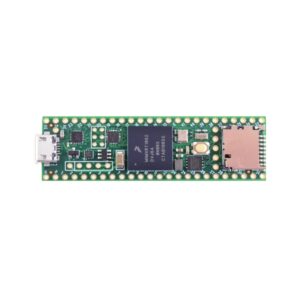
Teensy 4.1
Teensy 4.1 is simply the most powerful platform of the Arduino environment :
- ARM Cortex-M7 at 600 MHz with a 32 and 64 bits FPU
- 7936KB Flash, 1MB RAM, 4K EEPROM (emulated)
- QSPI memory expansion, locations for 2 extra RAM or Flash chips
- 2 USB ports, both 480 MBit/sec
- 8 Serial ports, 3 SPI, 3 I2C, 3 CAN Bus (1 with CAN FD)
- 2 I2S Digital Audio, 1 S/PDIF Digital Audio
- Ethernet 10/100 Mbit with DP83825 PHY
- 1 SDIO (4 bit) native SD
- 32 general purpose DMA channels
- 35 PWM pins
- 55 digital I/Os, all interrrupt capable, with 41 accessible on pins
- 18 analog inputs / 2 ADCs
- Cryptographic Acceleration, Random Number Generator
- RTC for date/time
- Pixel Processing Pipeline
Drivers Download : Teensy Drivers
SKU: 554 -
USB, MicroMod
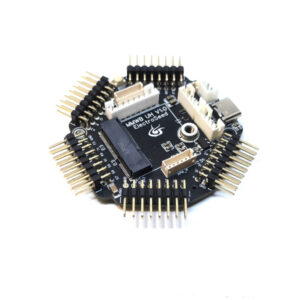
ElectroSeed MMWB H
The MMWB H board allows you to connect daughterboards in MicroMod format and offers unique features. Ideal for USB configurations with or without USB screens (like Vocore), it proposes filters and protections on USB input and output lines. To use it with a USB screen, you’ll have to associate it with the Samd21J Hub daughter board, which includes a USB HUB.
SKU: 682